The Hidden Cost of AI Convenience
How to use AI without handing over your entire digital life — from cloud subscriptions to local inference.
Artificial intelligence has become the tool people did not know they needed until suddenly they could not imagine working without it. The utility is real. The productivity gains are real. But so is the privacy cost, and that part gets discussed far less honestly than it should be.
Every prompt you send to an AI service leaves a trail. Every conversation, every code snippet, every question about your business, your health, your relationships, your finances — all of it traverses servers you do not control, gets logged by companies you did not choose, and sits in databases you cannot audit. This is not paranoia. This is simply how centralized AI services work.
The question is not whether you should use AI. The question is whether you are willing to pay for it with your privacy, and if so, how much.
Why your AI privacy matters
The instinct to dismiss AI privacy concerns is understandable. Most people are not plotting crimes or asking language models to help them evade law enforcement. But that framing misses the point entirely.
Privacy with AI is not about hiding wrongdoing. It is about controlling the context of your life.
When you use a centralized AI service, you are handing over:
Your intellectual patterns: How you think, what you struggle with, what you are trying to build, where your knowledge gaps are. Over time, this builds a remarkably detailed profile of your cognitive habits and professional capabilities.
Your actual work: Code snippets, draft documents, business strategies, research directions, personal writing. You may not consider this sensitive in isolation, but aggregated, it represents a substantial portion of your creative and professional output.
Your intent and trajectory: What you are planning, what you are learning, what problems you are trying to solve. This is metadata that reveals where you are headed before you get there.
Your relationships and communications: If you paste emails, chat logs, or correspondence into an AI for summarization or drafting, you are exposing not just your own data but other people’s as well.
None of this requires malice to become problematic. A data breach, a subpoena, a change in terms of service, a merger or acquisition, a rogue employee, a government demand — the data exists, and once it exists, it can be accessed. The question is whether you want that data sitting on someone else’s infrastructure in the first place.
Every prompt is a data point. Aggregated prompts are a profile. Profiles are valuable, and you are not the one profiting.
The spectrum of AI privacy
Not all AI usage carries the same privacy cost. There is a spectrum, and where you land on it depends on what you are willing to trade.
At one end, you have maximum convenience and minimum privacy: swiping a credit card for a monthly subscription to a centralized AI provider. At the other end, you have maximum privacy and maximum effort: running open-source models on your own hardware, locally, with no external data transmission.
In between, there are intermediate options that offer partial privacy improvements without requiring you to become your own AI infrastructure operator. Each comes with its own trade-offs.
Let’s walk through them honestly.
Level 1: Direct subscription with credit card
This is the default path. You sign up for Claude, ChatGPT, or another major AI service, enter your credit card details, and start using the product.
What you give up:
Payment identity linkage: Your credit card ties your AI usage directly to your legal name and billing address. There is no ambiguity about who you are.
Full conversation logging: Every prompt, every response, every conversation thread is stored on the provider’s servers indefinitely. You cannot verify deletion claims, and you have no control over retention policies.
Usage pattern analysis: The provider can analyze when you use the service, how often, for what purposes, and build detailed behavioral profiles.
Data access by employees: In most cases, AI company employees can access conversation logs for training, debugging, or compliance purposes. You are trusting their internal policies and access controls.
Government and legal exposure: Your data is subject to whatever legal demands the provider receives. A subpoena can pull your entire conversation history without you ever knowing.
What you gain:
Best-in-class models: You get access to the most capable frontier models with the latest capabilities.
Stable monthly pricing: Predictable subscription costs, typically $20/month for consumer tiers.
Reliable uptime: Enterprise-grade infrastructure with high availability.
Highest context windows: The largest context windows available, enabling longer conversations and document analysis.
Polished user experience: Well-designed interfaces, mobile apps, and integrations.
This is the convenience-maximizing option. It is also the privacy-minimizing option. If you are comfortable with that trade, fine. But do not pretend the trade does not exist.
Direct subscription means trading privacy for convenience. Know what you are selling and what you are buying.
Level 2: Proxy provider with credit card
The next step up involves using a proxy provider like OpenRouter instead of going directly to the AI company. You still pay with a credit card, but you add a layer of indirection between you and the model provider.
What improves:
Reduced direct linkage: The model provider (Anthropic, OpenAI, etc.) sees requests coming from OpenRouter, not from you directly. Your identity is one step removed.
Model flexibility: You can access multiple models from different providers through a single interface and API key.
Pay-per-use pricing: Instead of a fixed monthly subscription, you pay for what you actually use. This can be cheaper for light users.
What stays the same:
Payment identity: You still pay with a credit card, so your legal identity is still attached to your account.
Conversation logging: The proxy provider can log your prompts and responses. You are trusting them instead of (or in addition to) the model provider.
Usage pattern exposure: The proxy provider sees your usage patterns, timing, and model preferences.
New risks introduced:
Additional trust surface: You are now trusting two entities instead of one — the proxy provider and the underlying model provider.
Potential for data sharing: Depending on the proxy provider’s policies, your data may be shared with or sold to third parties.
Variable privacy policies: Different proxy providers have different privacy commitments. Some may be better than the direct providers; others may be worse.
This is a marginal improvement in privacy, but not a fundamental one. You have added complexity without truly changing the trust model.
Level 3: Proxy provider with privacy-preserving payment
This is where things get more interesting. Services like PayPerQ and NanoGPT allow you to pay with privacy-preserving cryptocurrencies like Bitcoin via Lightning, post-Whirlpool coinjoined Bitcoin, or Monero.
What improves significantly:
Payment anonymity: Your AI usage is no longer linked to your credit card or legal identity. You pay with cryptocurrency that does not carry your name.
Reduced financial surveillance: Lightning payments are fast, cheap, and do not leave a permanent on-chain trail. Monero provides strong privacy guarantees by default. Post-Whirlpool Bitcoin breaks the deterministic links between your coins and their history.
Account decoupling: You can create accounts with minimal identifying information, often just an email address (which can be a throwaway or alias).
What stays the same:
Conversation logging: The provider still sees and can log your prompts and responses. You are trusting their privacy policies.
Usage pattern exposure: The provider can still analyze your usage patterns, even if they do not know your legal name.
New risks introduced:
Service stability: Smaller, crypto-native providers may have less stable infrastructure than major AI companies. They may be less transparent about which model has how many providers and their uptime.
Policy changes mid-cycle: NanoGPT, for example, has changed what models are avaliable in its subscription multiple times during billing cycles. Understandable from a business perspective, but very frustrating as a customer.
Uptime variability: These services may experience more downtime or rate limiting than major providers.
This is a meaningful step up in privacy. You have severed the payment identity link. But you are still sending your data to someone else’s servers.
Privacy-preserving payment breaks the financial link, but your data still leaves your machine. This is partial privacy, not full sovereignty.
Level 4: Self-hosted open-source models
The most private option is also the most demanding: running open-source models on your own hardware, locally, with no external data transmission.
Tools like Ollama and LM Studio make this increasingly accessible. You download a model weights file, run it on your own GPU or CPU, and all inference happens on your machine.
What you gain:
Complete data sovereignty: No prompt ever leaves your machine. No conversation is ever logged on external servers. You control the entire pipeline.
No usage tracking: There is no provider to track your usage patterns, timing, or query content.
No payment linkage: You are not paying anyone for inference. The only cost is your hardware and electricity.
Censorship resistance: You can use the model for any purpose without worrying about content policies or usage restrictions.
Offline capability: Once the model is downloaded, you can use it without an internet connection.
Reproducibility: You know exactly which model version you are running. No silent updates or capability changes.
What you trade:
Upfront hardware cost: Running capable models locally requires serious hardware. A used workstation with a good GPU, or a dedicated machine, can easily cost $1,000-3,000 upfront. This is not a monthly subscription you can cancel; it is a capital investment.
Model capability gap: The best open-source models are impressive, but they lag behind the frontier models from Anthropic and OpenAI. If you need the absolute best reasoning capabilities, local models may not match up.
Context window limitations: Local models typically have smaller context windows than cloud offerings (due to the hardware requirements being so expensive). You may not be able to stuff entire codebases or long documents into context.
Technical complexity: You need to understand hardware requirements, model formats, quantization, and basic system administration. It is not insurmountable, but it is not plug-and-play either.
Maintenance burden: You are responsible for updates, hardware failures, and performance tuning. There is no support department to call.
Electricity costs: Running a GPU for inference consumes power. Over time, this adds up, especially if you are running models frequently.
This is the sovereignty-maximizing option. It is also the effort-maximizing option. You are choosing to own your infrastructure rather than rent someone else’s.
Self-hosting is not about having something to hide. It is about refusing to hand over your cognitive context to strangers.
The special case of vibecoding
AI has another major use case beyond conversation and analysis: coding assistance. The rise of “vibecoding” — using AI to write, review, and refactor code — has transformed how many developers work. But it has also created a new privacy surface that deserves specific attention.
When you use Claude Code, GitHub Copilot, or OpenAI’s Codex, you are potentially exposing:
Your entire codebase: If you use AI-powered IDE integrations, you may be sending substantial portions of your code to external servers for analysis and completion.
Your coding patterns: How you structure projects, what libraries you prefer, what mistakes you commonly make, what you are trying to build.
Your proprietary logic: Business logic, algorithms, and implementation details that may constitute intellectual property.
Your dependencies and architecture: What tools you use, how you structure your systems, what your infrastructure looks like.
For professional developers, this is not trivial. Your code is your work product. Sending it to a third party for convenience is a decision that should be made deliberately, not accidentally.
The sovereign alternative: open-source vibecoding harnesses
There is a growing ecosystem of open-source coding assistants that can work with local models or privacy-preserving proxy providers:
Cline: A VS Code extension that can connect to local models via Ollama or to API providers. You control what gets sent where.
Roo Code: A fork of Cline with additional features and model support. Same principle: local-first, user-controlled.
Kilo Code: Another open-source coding assistant with a focus on privacy and local inference.
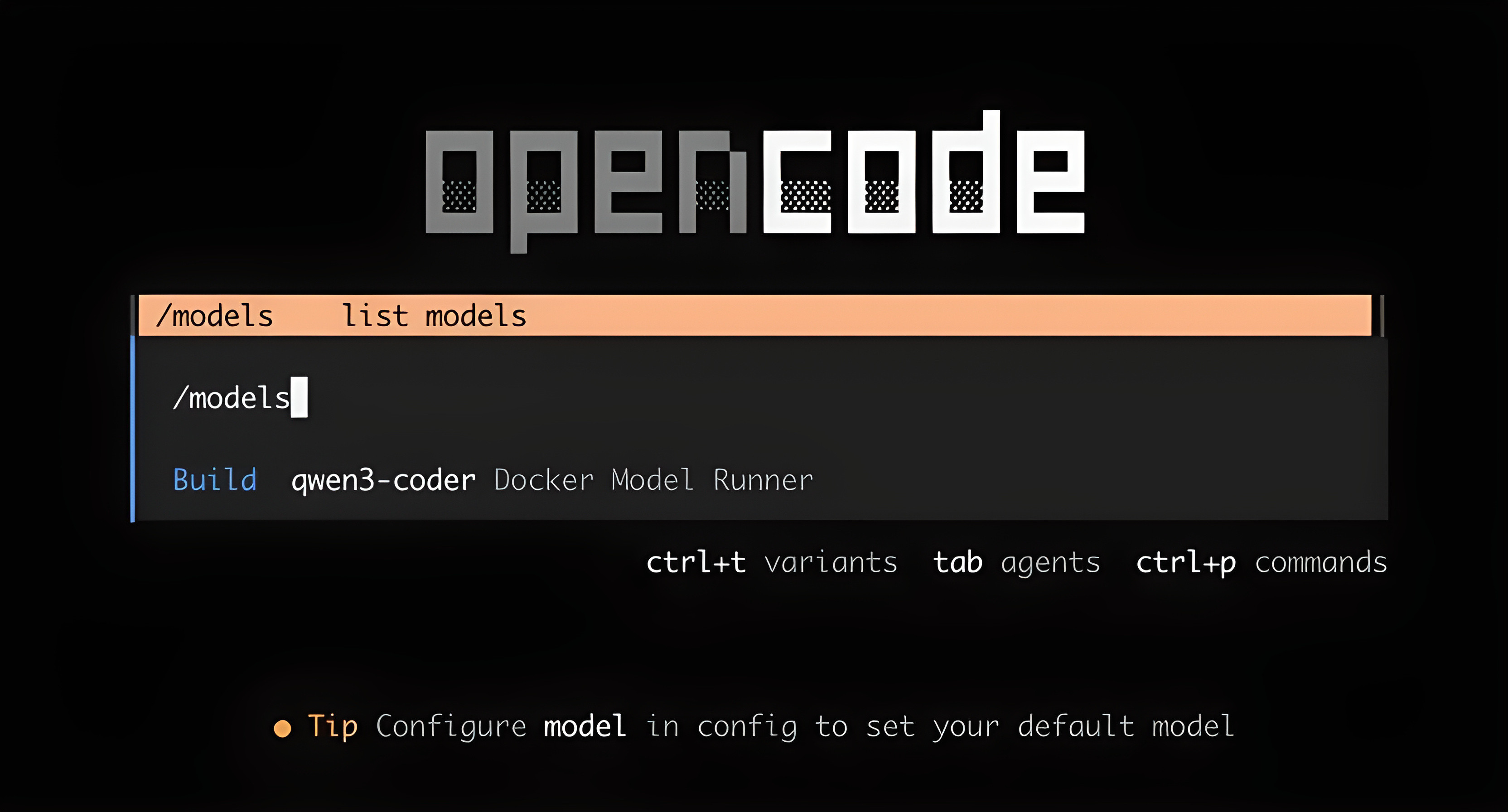
OpenCode: A terminal-based coding assistant that can work with local models.
These tools give you the vibecoding experience without mandatory data exfiltration. You can:
Run them entirely locally with self-hosted models for maximum privacy.
Connect them to privacy-preserving proxy providers (paid with crypto) for better model capability while maintaining payment anonymity.
Mix and match based on the sensitivity of what you are working on.
The experience can be just as polished as GitHub Copilot or Claude Code. And you are not handing your entire codebase to a company that might use it for training, might get acquired, or might receive a legal demand for your data.
Vibecoding with closed tools means outsourcing your coding context. Open-source harnesses let you keep that context under your control.
A pragmatic framework for choosing
There is no single right answer. The appropriate choice depends on what you are doing, what you are willing to spend, and what you are comfortable exposing.
Use direct subscription (Level 1) when:
- You are working on non-sensitive personal projects.
- You need the absolute best model capability available.
- You value convenience and reliability above all else.
- You are comfortable with the privacy trade-offs.
Use a proxy provider with credit card (Level 2) when:
- You want model flexibility and pay-per-use pricing.
- You are okay with the same privacy trade-offs as direct subscription.
- You want to consolidate access to multiple models.
Use a proxy provider with privacy-preserving payment (Level 3) when:
- You want to break the payment identity link.
- You are working on moderately sensitive material.
- You can tolerate some service variability.
- You want better privacy without becoming your own infrastructure operator.
Self-host local models (Level 4) when:
- You are working on highly sensitive material.
- You want complete data sovereignty.
- You are willing to invest in hardware and learning.
- You can accept the capability gap from frontier models.
- You are thinking about AI usage as a long-term practice, not a temporary experiment.
For vibecoding specifically:
- Use closed tools (Copilot, Claude Code) for non-sensitive projects where convenience matters most.
- Use open-source harnesses (Cline, Roo Code) with local models for proprietary or sensitive work.
- Use open-source harnesses with privacy-preserving proxy providers for a middle ground.
The honest truth about trade-offs
AI privacy is not a binary. It is a spectrum of choices, each with costs and benefits.
The convenience of Claude or ChatGPT is real. The capability gap between frontier models and open-source alternatives is real. The hardware investment required for local inference is real. Pretending otherwise is not helpful.
But the privacy cost is also real. The data you send to these services is not yours anymore. It sits on servers you do not control, subject to policies you did not write, accessible to people you did not choose.
For some uses, that trade is acceptable. For others, it is not. The important thing is to make the choice deliberately, with full awareness of what you are giving up.
Most people using AI today have not made that choice. They have simply accepted the default, swiped their credit card, and started prompting. That is understandable. Convenience is seductive. But it is not sovereign.
If you care about controlling your digital context — your thoughts, your work, your patterns, your trajectory — then you should care about where your AI prompts land. They are not just text. They are pieces of you.
Handle them accordingly.
Final thoughts
The AI privacy question is ultimately a sovereignty question. Do you want to own your cognitive context, or are you willing to rent it out in exchange for convenience?
There is no judgment in either answer. But there should be awareness. Every prompt you send to a centralized AI service is a small surrender of context. Over time, those surrenders accumulate into a detailed picture of how you think, what you know, and what you are trying to become.
If that does not bother you, fine. Use the most convenient tool and move on with your life.
If it does bother you, even a little, then consider the alternatives. Start with a privacy-preserving proxy provider. Experiment with local models on hardware you already own. Try an open-source coding assistant instead of Copilot.
You do not have to choose maximum sovereignty or maximum convenience. You can find a point on the spectrum that matches your threat model, your budget, and your tolerance for complexity.
The point is to choose. The default is not neutral. The default is surveillance. If you want something different, you have to reach for it yourself.
That is the boring, honest truth about AI privacy. The tools exist. The trade-offs are knowable. The choice is yours.
Make it deliberately.